内容提供者
内容提供者

功能对等理论视角下的博物馆文本英译失误研究——以上海博物馆文本为例.docx
 2024-11-22
 5金币
5金币
 11KB
11KB
 2页
2页

骑着****猪猪
 实名认证
内容提供者
实名认证
内容提供者


在线预览结束,喜欢就下载吧,查找使用更方便
相关资料

功能对等理论视角下的博物馆文本英译失误研究——以上海博物馆文本为例.docx
功能对等理论视角下的博物馆文本英译失误研究——以上海博物馆文本为例ResearchonTranslationErrorsinMuseumTextsfromthePerspectiveofEquivalenceTheory:ACaseStudyofShanghaiMuseumAbstract:Museumtextsplayacrucialroleinconveyingknowledgeandinformationtovisitors,particularlyincreatingabridgebetweend
2024-11-22
5
11KB

功能对等理论视角下的博物馆文本英译失误研究——以上海博物馆文本为例的开题报告.docx
功能对等理论视角下的博物馆文本英译失误研究——以上海博物馆文本为例的开题报告Title:AStudyonTranslationErrorsinMuseumTextsfromthePerspectiveofFunctionalEquivalenceTheory:TakingShanghaiMuseumTextsasanExampleIntroduction:Museumsareimportantcarriersandprotectorsofhumanculturalheritage,andtheirtext
2024-10-15
5
10KB

文化翻译理论视角下博物馆文本英译--以恩施土家族博物馆为例的开题报告.docx
文化翻译理论视角下博物馆文本英译--以恩施土家族博物馆为例的开题报告开题报告题目:文化翻译理论视角下博物馆文本英译--以恩施土家族博物馆为例一、选题背景随着全球化的加速和文化交流的不断扩大,博物馆展示文化遗产和历史的重要性越来越被重视。许多国际性博物馆在英语世界有着广泛的影响力,但对于中国的博物馆来说,能否成功实现与外界的互动和交流,依赖于其对外宣传的文字和语言表达的准确性和文化全面性。因此,对于博物馆文本的翻译,必须考虑到文化的差异,避免出现错误或引起误解。本研究选取中部偏西地区的恩施土家族博物馆作为研
2024-10-03
5
11KB

文化翻译理论视角下博物馆文本英译--以恩施土家族博物馆为例的任务书.docx
文化翻译理论视角下博物馆文本英译--以恩施土家族博物馆为例的任务书任务书一、任务背景随着文化交流、经济全球化的不断发展,中国的博物馆文化也越来越受到世界各地的关注。博物馆文本的英译作为一项重要的任务,其翻译质量和效果直接影响到博物馆文化传播效益和国际影响力。同时,根据文化翻译理论视角,博物馆文本的英译也体现了文化交流和跨文化传播的过程和特点,具有重要的理论和实践意义。二、任务目的本次任务旨在以恩施土家族博物馆为例,运用文化翻译理论视角分析博物馆文本的英译现状和难点,并提出翻译策略和技巧,提高博物馆文本的英
2024-10-13
5
11KB
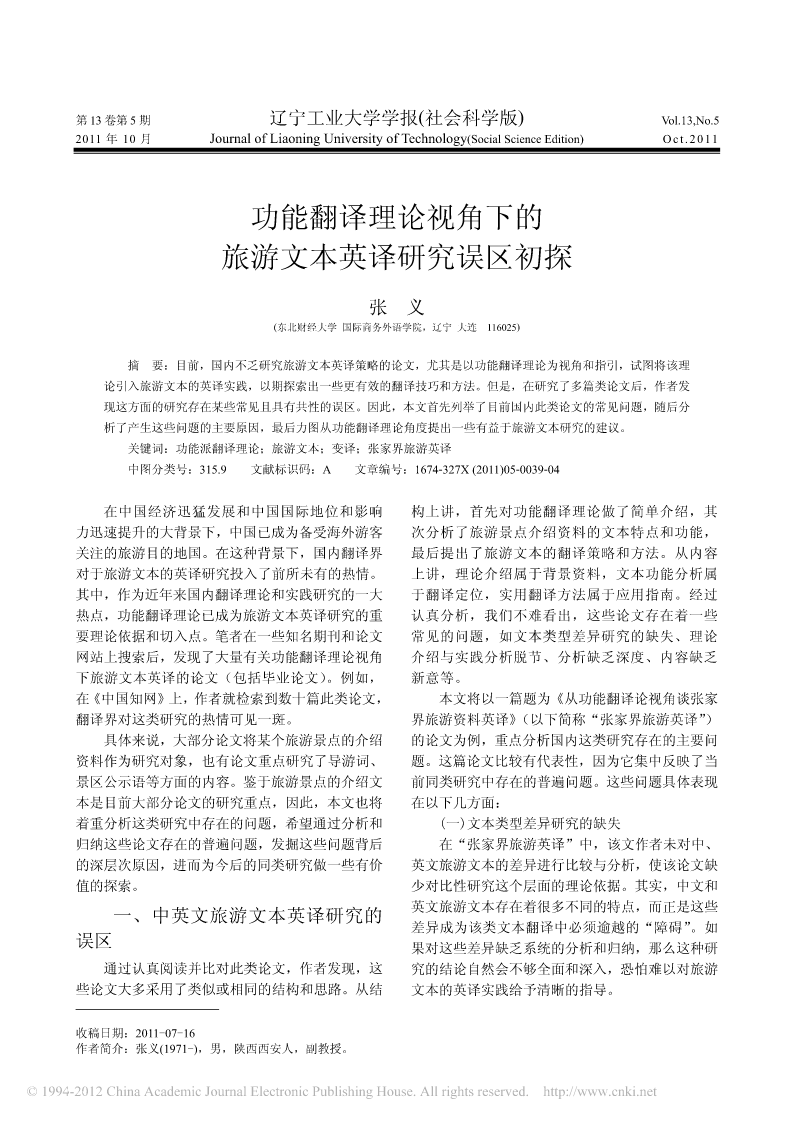
功能翻译理论视角下的旅游文本英译研究误区初探.pdf
第13卷第5期辽宁工业大学学报(社会科学版)Vol.13,No.52011年10月JournalofLiaoningUniversityofTechnology(SocialScienceEdition)Oct.2011功能翻译理论视角下的旅游文本英译研究误区初探张义(东北财经大学国际商务外语学院,辽宁大连116025)摘要:目前,国内不乏研究旅游文本英译策略的论文,尤其是以功能翻译理论为视角和指引,试图将该理论引入旅游文本的英译实践,以期探索出一些更有效的翻译技巧和方法。但是,在研究了多篇类论文后,作者
2024-09-17
10
588KB