内容提供者
内容提供者

氧驱动雾化吸入与空气压缩泵雾化吸入治疗小儿哮喘的比较.pdf
 2024-08-01
 10金币
10金币
 665KB
665KB
 7页
7页

文库****品店
 实名认证
内容提供者
实名认证
内容提供者


在线预览结束,喜欢就下载吧,查找使用更方便
相关资料

氧驱动雾化吸入与空气压缩泵雾化吸入治疗小儿哮喘的比较.pdf
氧驱动雾化吸入与空气压缩泵雾化吸入治疗小儿哮喘的比较艾美莲,花响岭,胡新和抚州市第一医院儿科江西抚州344000[摘要]目的比较氧驱动雾化吸入与空气压缩泵雾化吸入治疗小儿哮喘疗效及优缺点,探讨小儿哮喘治疗的最佳吸入方法。方法2007年1月--2009年1月我科收治的小儿支气管哮喘急性发作120例,随机分成两组,每组60例,在相同综合治疗的基础上,观察组用氧驱动雾化吸入布地萘德气雾剂0.5mg+复方异丙托溴铵溶液0.8ml+生理盐水1ml,每天2次,对照组采用空气压缩泵雾化吸入相同药物及次数,治疗4天后观察
2024-08-01
10
665KB

氧驱动雾化吸入与空气压缩泵雾化吸入治疗小儿哮喘的效果及安全性比较.docx
氧驱动雾化吸入与空气压缩泵雾化吸入治疗小儿哮喘的效果及安全性比较(简阳市中医医院四川简阳641400)【摘要】目的:探讨氧驱动雾化吸入与空气压缩泵雾化吸入治疗小儿哮喘的效果及安全性。方法:回顾分析2017年5月-2018年9月期间儿科收治的100例小儿哮喘患儿,划分为对照组与观察组各50例,对照组运用空气压缩泵雾化吸入治疗,观察组运用氧驱动雾化吸入治疗,分析不同治疗后患儿呼吸困难消除时间、胸闷咳嗽消除时间、住院时间、最大呼气流量治疗前后对比情况。结果:在呼吸困难消除时间、胸闷咳嗽消除时间、住院时间等恢复速
2024-02-02
12
17KB

超声与氧驱动雾化吸入治疗小儿哮喘的疗效比较.docx
超声与氧驱动雾化吸入治疗小儿哮喘的疗效比较摘要:目的:比较在小儿哮喘进行吸入治疗时应用超声雾化和氧驱动雾化治疗的效果。方法:选取2015年1月-2015年12月在医院接受治疗的90例哮喘患儿作为研究对象,将入选患者随机平均分成两组,超声组和氧气组各45例,超声组患者应用超声雾化法吸入布地奈德混悬溶液,氧气组应用氧气驱动进行雾化吸入布地奈德混悬溶液,比较两组患儿的治疗效果。结果:氧气组的治疗有效率(95.56%)显著高于超声组(84.44%);氧气组各项临床症状的改善时间和住院时间均明显比超声组短;氧气组的
2024-04-30
9
75KB

雾化吸入治疗小儿哮喘的临床护理研究.docx
雾化吸入治疗小儿哮喘的临床护理研究摘要:目的:对采用雾化吸入治疗的小儿哮喘患者进行相关护理的效果。方法:选取我院在2011年7月-2012年8月收治的95例小儿哮喘患者均采用雾化吸入的治疗方法对这些患者进行科学有效的护理并观察其结果。结果:95例小儿哮喘患者护理显效的患者有62例护理有效的有27例护理无效6例。结论:对采用雾化吸入治疗的小儿哮喘患者进行合理的护理可以提高治疗效果。关键词:雾化吸入治疗;小儿哮喘;临床护理中图分类号:R256.12文献标识码
2023-11-30
10
19KB
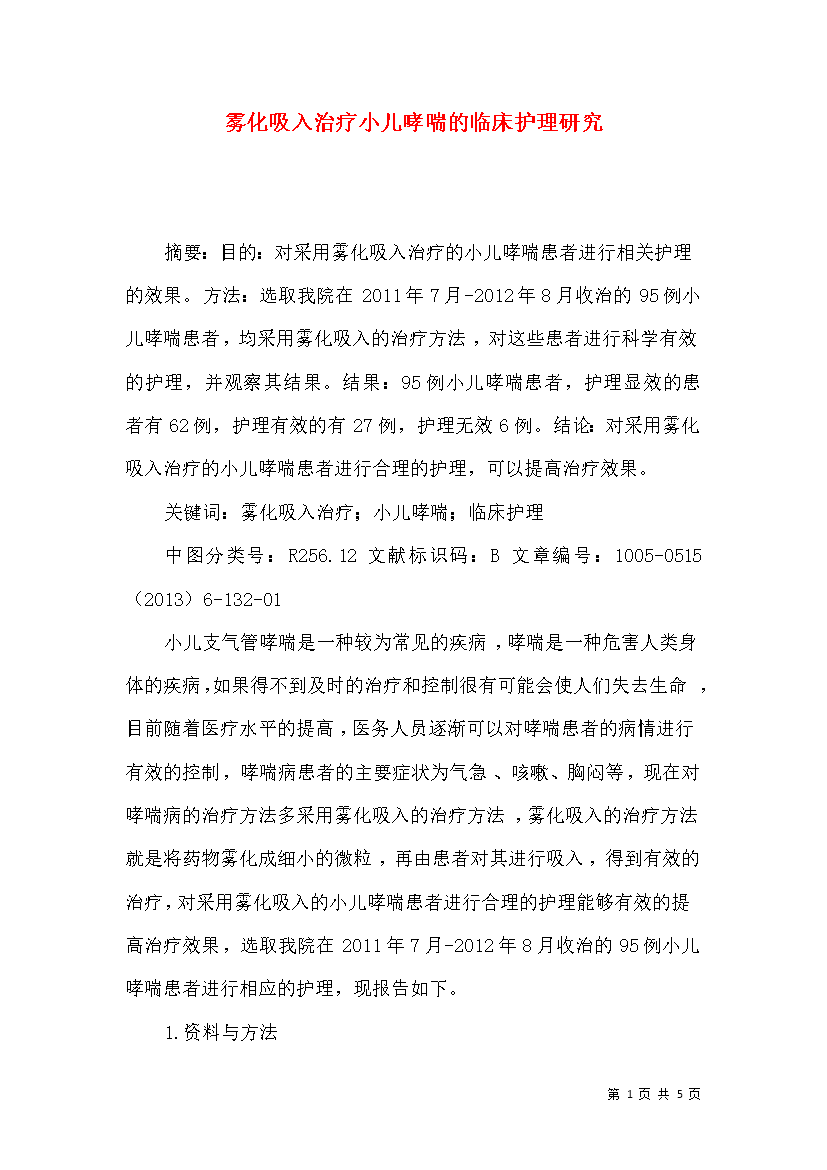
雾化吸入治疗小儿哮喘的临床护理研究.docx
雾化吸入治疗小儿哮喘的临床护理研究摘要:目的:对采用雾化吸入治疗的小儿哮喘患者进行相关护理的效果。方法:选取我院在2011年7月-2012年8月收治的95例小儿哮喘患者均采用雾化吸入的治疗方法对这些患者进行科学有效的护理并观察其结果。结果:95例小儿哮喘患者护理显效的患者有62例护理有效的有27例护理无效6例。结论:对采用雾化吸入治疗的小儿哮喘患者进行合理的护理可以提高治疗效果。关键词:雾化吸入治疗;小儿哮喘;临床护理中图分类号:R256.12文献标识码
2023-08-20
10
19KB