内容提供者
内容提供者

双电机齿轮同步驱动系统转矩均衡控制.docx
 2024-11-22
 5金币
5金币
 11KB
11KB
 2页
2页

骑着****猪猪
 实名认证
内容提供者
实名认证
内容提供者


在线预览结束,喜欢就下载吧,查找使用更方便
相关资料

双电机齿轮同步驱动系统转矩均衡控制.docx
双电机齿轮同步驱动系统转矩均衡控制双电机齿轮同步驱动系统转矩均衡控制摘要双电机齿轮同步驱动系统在许多工程应用中得到广泛应用,其能够实现高效、精确的运动控制。然而,由于工作时存在传动误差和摩擦力等影响因素,导致双电机之间的转矩不平衡,这对系统性能的稳定性和可靠性造成了一定的影响。为了解决这个问题,本论文提出了一种双电机齿轮同步驱动系统转矩均衡控制方法。首先,针对双电机之间转矩不平衡问题的原因进行了分析。通过研究发现,转矩不平衡主要是由于传动误差和摩擦力的不一致造成的。基于这一分析,提出了一种基于反馈的转矩均
2024-11-22
5
11KB
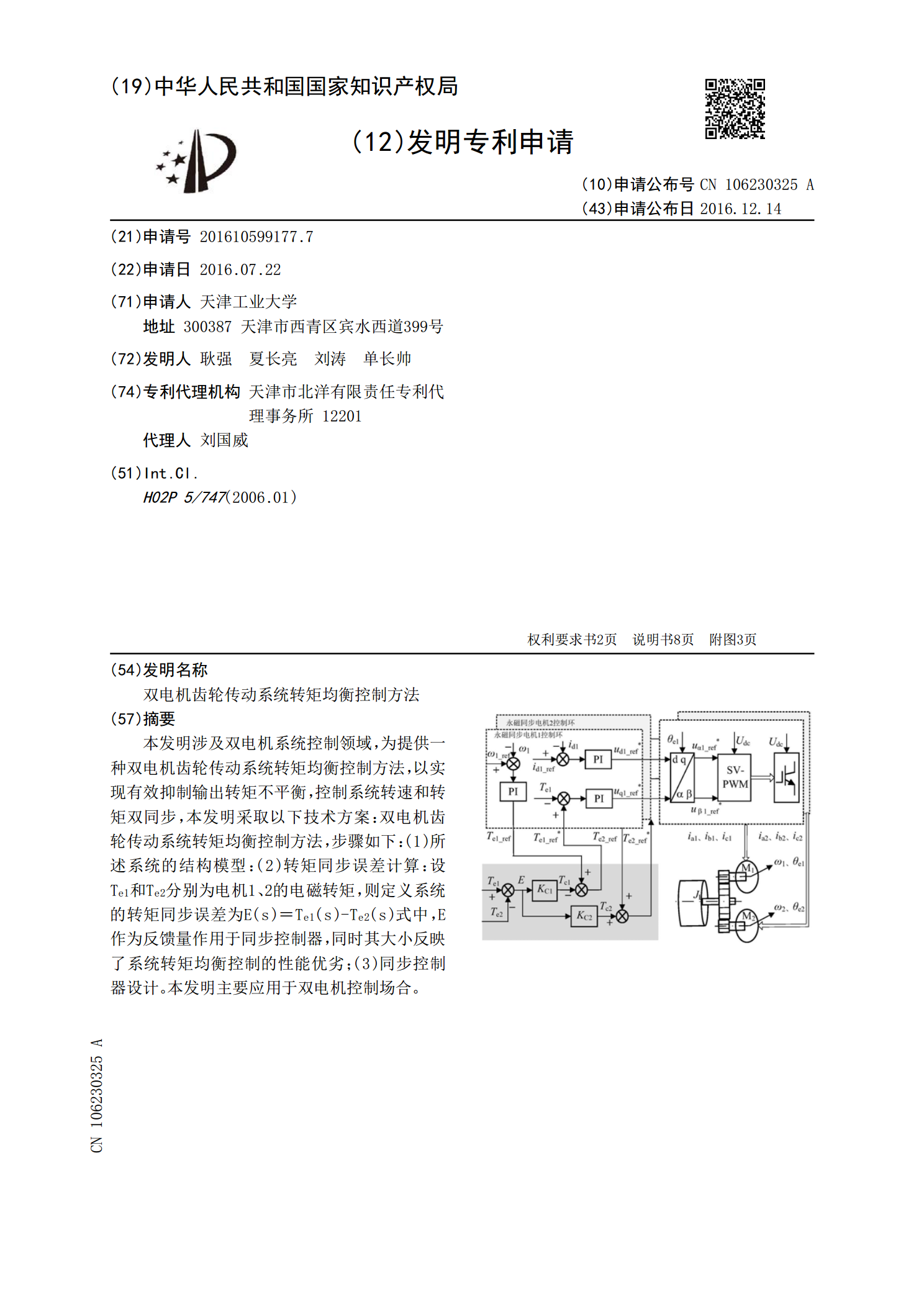
双电机齿轮传动系统转矩均衡控制方法.pdf
本发明涉及双电机系统控制领域,为提供一种双电机齿轮传动系统转矩均衡控制方法,以实现有效抑制输出转矩不平衡,控制系统转速和转矩双同步,本发明采取以下技术方案:双电机齿轮传动系统转矩均衡控制方法,步骤如下:(1)所述系统的结构模型:(2)转矩同步误差计算:设T
2023-09-03
10
1.1MB

混合励磁同步电机驱动系统直接转矩控制研究.docx
混合励磁同步电机驱动系统直接转矩控制研究引言混合励磁同步电机具有独特的结构和性能优势,是一种新型高性能电机,被广泛应用于机床、电动工具、家电等领域。但是,混合励磁同步电机在控制上存在许多难点,如控制系统复杂、调试难度大等问题。因此,对混合励磁同步电机驱动系统的研究具有重要的理论和应用意义。本文研究混合励磁同步电机驱动系统直接转矩控制的方法和实现。一、混合励磁同步电机工作原理混合励磁同步电机是一种由永磁体和励磁线圈两种不同的磁场组件组成的电机。其工作原理是通过控制转子的位置和角速度,使得永磁体和励磁线圈的磁
2024-11-03
5
11KB

永磁同步电机驱动系统三电平直接转矩控制算法.docx
永磁同步电机驱动系统三电平直接转矩控制算法摘要永磁同步电机是一种高效、高精度、高可靠性的电机,被广泛应用于驱动系统中。在永磁同步电机的控制中,三电平直接转矩控制算法是一种高效的控制方法。本文将对该算法进行详细的介绍和分析,从控制原理、运行流程、实现步骤、优缺点等方面进行探讨,为相关研究提供参考。关键词:永磁同步电机、驱动系统、三电平直接转矩控制算法AbstractPermanentmagnetsynchronousmotorisakindofhigh-efficiency,high-precisionan
2024-10-22
5
11KB

双转子永磁同步电机直接转矩控制系统设计.docx
双转子永磁同步电机直接转矩控制系统设计双转子永磁同步电机直接转矩控制系统设计双转子永磁同步电机概述双转子永磁同步电机是指同时具有两个转子的永磁同步电机,一般地,两个转子采用不同的结构,一个为外转子,一个为内转子,具有相对旋转的特性。双转子永磁同步电机的结构紧凑,能够实现高扭矩和高功率密度,特别适用于电动车和混合动力车的驱动电机。但为了满足要求,需要设计合适的控制系统。直接转矩控制的原理和优势双转子永磁同步电机的控制系统通常采用直接转矩控制方法,该方法是通过控制电流大小和相位来达到控制电机转矩的目的。与传统
2024-10-22
5
11KB